Rugged hardware and RFID, ready for real field work.
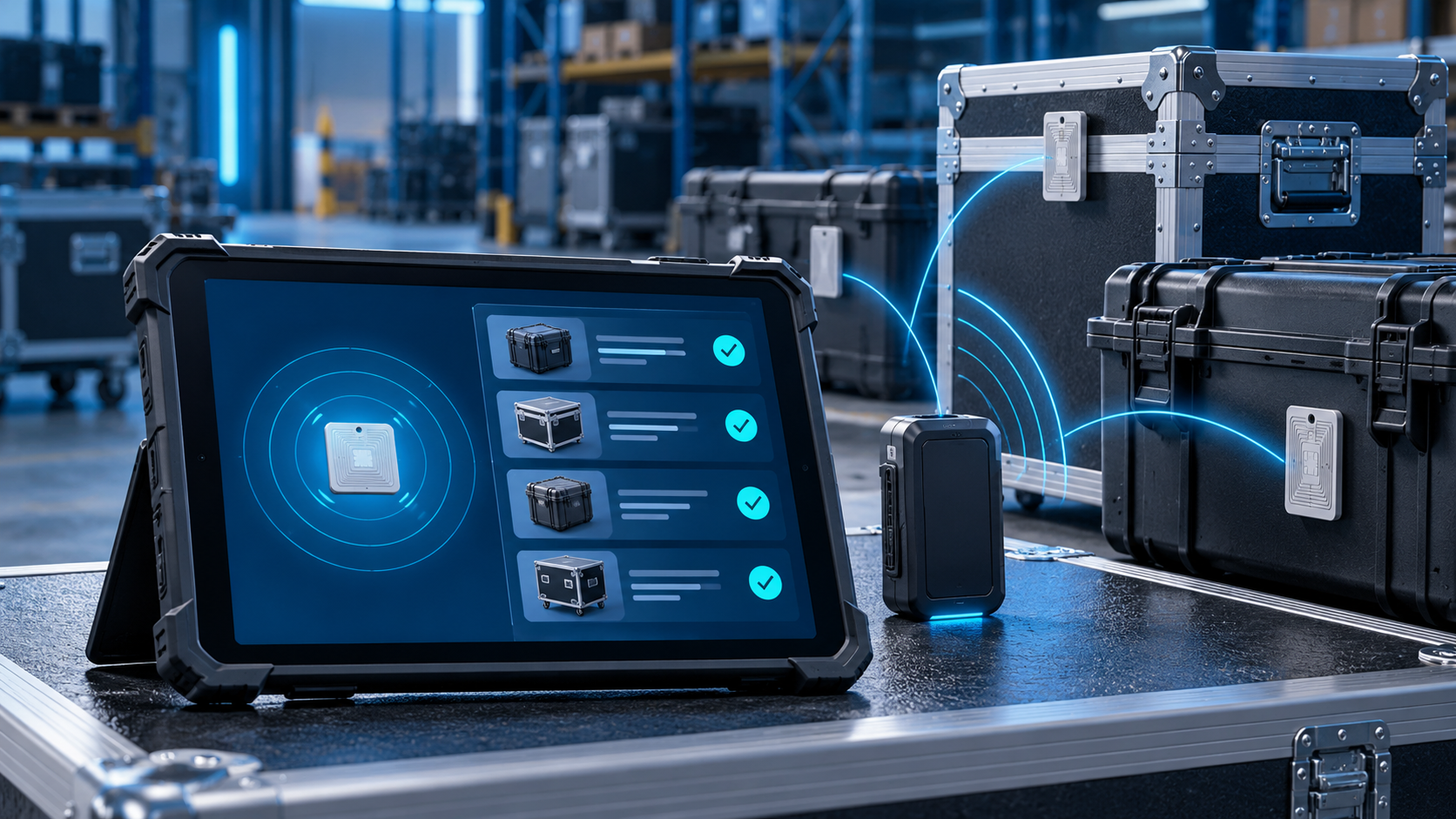
Source Getac rugged computing, Theia RFID solutions, and CAEN RFID technology with practical help selecting, configuring, integrating, and supporting the complete system.
 Request hardware guidance
Field ready
Rugged mobile computing selected for the operating environment
RFID expertise
Readers, modules, antennas, tags, and application integration
Configured solution
Hardware and software designed to work as one system
Lifecycle support
Guidance from product selection through deployment and operation
Select equipment as part of a working field system
The device, reader, tags, software, and support path should be tested against the same task.
Getac rugged computing
Rugged tablets and mobile computers for demanding field, industrial, public-sector, transportation, and defense-oriented environments, selected around workflow and deployment needs.
Learn more →Theia RFID solutions
Purpose-built RFID hardware and integrations for Getac platforms, backed by hands-on experience across product design, manufacturing, deployment, and customer support.
Learn more →CAEN RFID technology
RFID readers, modules, antennas, and supporting components for fixed, mobile, embedded, and specialized identification and tracking applications.
Learn more →Inventory & asset tracking
Full-stack applications connecting RFID events to inventory, chain-of-custody, maintenance, reporting, and real-time operational workflows.
Learn more →Edge AI & disconnected operation
Secure edge-compute and private knowledge capabilities for rugged devices working where connectivity is limited, denied, or intentionally isolated.
Learn more →Custom hardware/software integration
Mechanical, electronic, firmware, API, database, cloud, and user-interface work coordinated around the complete field workflow.
Learn more →Prove the configuration in the real environment
Define the environment
Review users, workflow, tags, read range, mounting, connectivity, durability, security, and application requirements.
Select and configure
Match Getac, Theia, and CAEN options to the use case, including required accessories and integration work.
Deploy and support
Prepare the solution for rollout, connect it to business systems, and establish an appropriate support plan.
What to define before a field rollout
A pilot should test the full workflow, not only whether a tag can be read on a desk.
The operator and environment
Describe who uses the device, where it is carried or mounted, the protective equipment involved, lighting, weather, power, connectivity, and shift length. Test the actual software task with representative operators. Hardware features matter only when they support this working context.
The RFID read scenario
Identify tag material, placement, distance, orientation, movement, surrounding equipment, and acceptable missed or duplicate reads. Record what the application should do when identification is uncertain. A controlled pilot can expose constraints that product specifications alone cannot answer.
The data and integration path
Define how a read becomes an asset, inventory, or maintenance event in the system of record. Include stable identifiers, timestamp and location needs, offline capture, synchronization, and correction of exceptions. The operational outcome matters more than raw read volume.
The configuration and support boundary
List accessories, mounting, charging, device management, spares, application updates, and the team that owns support. Separate verified product capabilities from configuration choices and availability questions. This gives procurement and deployment teams a realistic package to review.
An ergonomic field test
Ask operators to use the complete device, scanner, mount, protective gear, and application in a representative shift. Observe grip, visibility, charging, and recovery from a missed read. A component can meet its specification while the assembled workflow remains difficult to use.
A procurement evidence list
Record the tested configuration, required accessories, quantities, software dependencies, support responsibilities, and open availability questions. Separate demonstrated pilot behavior from assumptions that still need vendor confirmation. This gives buyers a clearer basis for reviewing options before a wider rollout.
Rugged hardware and RFID planning questions
Start with the use case; the right hardware follows from the operating requirements.
Plan a field technology pilot
Use these guides before choosing devices or readers.
How to Choose a Rugged Device for Field Work
Start with the operator, environment, and software task—not a model brochure.
Learn more →Design an RFID Pilot Before Buying Readers
Measure the workflow and read conditions before scaling hardware.
Learn more →Connect the workflow to evidence and review
Explore the AI capabilities around the communication or field workflow.
AI decision support
Make alternatives, assumptions and evidence explicit. Design evaluations that a reviewer can inspect and repeat.
Learn more →Rules and standards AI
Compare documents with controlled rulebooks. Surface cited findings, conflicts and missing evidence for human review.
Learn more →Tell us what the equipment must accomplish.
Share the environment, workflow, quantities, timing, and systems involved. Innov8now can help shape the right hardware and integration package.
Request hardware guidance